
Careem co-founders raise $40M for AI logistics platform serving MENAP corridor
Mudassir Sheikha and Magnus Olsson's new venture, Atlas, will route freight across the UAE-Saudi-Pakistan trade lane using fleet-level AI dispatch. Sequoia leads, with participation from STV and Aramco Ventures.
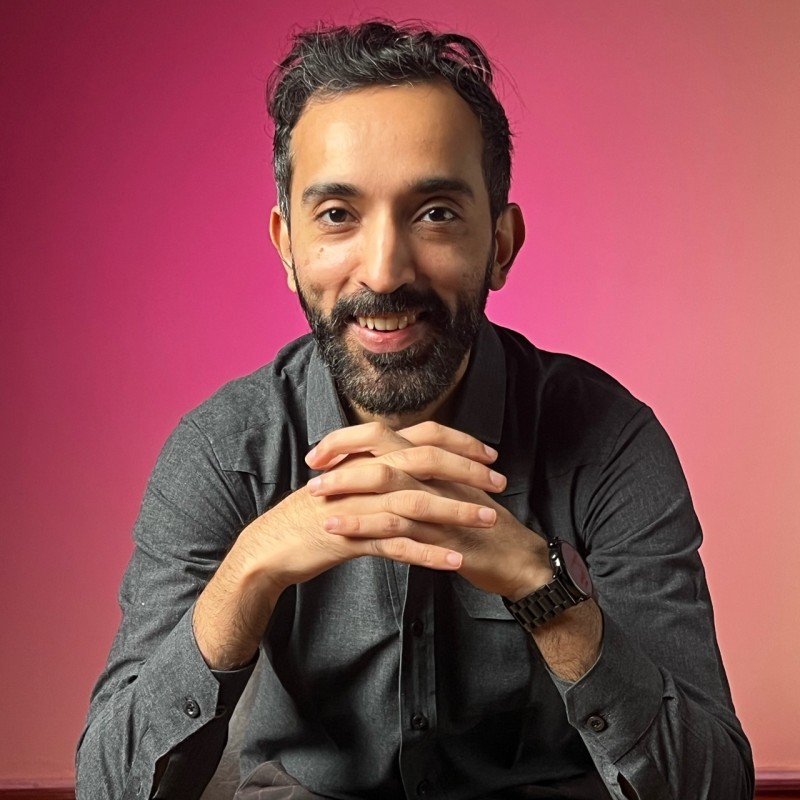

The short version. Atlas, the new venture from Careem co-founders Mudassir Sheikha and Magnus Olsson, has raised a $40 million Series A led by Sequoia, with participation from STV and Aramco Ventures, the company confirmed on Tuesday. The startup is building an AI-native freight dispatch and routing platform for the Middle East, North Africa, and Pakistan (MENAP) trade corridor. It is the largest publicly disclosed AI-focused logistics round in the region this year.
What Atlas is building
According to the company's pitch materials, which we've seen, Atlas is not building trucks or warehouses. It is building the software layer that sits above the region's fragmented trucking fleets: a unified dispatch engine that takes a shipment manifest, breaks it into legs, and routes each leg to the optimal local carrier in real time.
The differentiator, the company says, is the AI dispatch model itself. Trained on three years of route-level data licensed from regional fleet operators, it predicts not just driving time but customs clearance windows, fuel surcharge volatility, and load consolidation opportunities. The promise is a 12% to 18% reduction in landed cost for goods moving through the corridor.
Why this corridor
The UAE-Saudi-Pakistan lane is one of the world's busiest underdigitised trade routes. UAE re-exports drive a meaningful share of Pakistan's consumer goods imports, and Saudi Arabia's 2030 industrial buildout has tripled inbound freight in five years. Most of this still moves through brokers operating on WhatsApp.
"The corridor moves $180 billion of goods a year and runs on spreadsheets," Sheikha said in a statement. "We're not the first to point this out. We think we're the first with the data and the model to actually fix it."
The Careem playbook
Atlas is the most ambitious post-Careem move from the founding team since Uber acquired Careem for $3.1 billion in 2020. Sheikha has since invested in roughly two dozen regional startups through his family office. Olsson has been advising sovereign tech funds. Atlas is their first operating role together since the Uber deal closed.
The pattern, deliberate or not, resembles Careem's early years: a regional-first thesis, a Khaleeji and Pakistan-led founding team, and a willingness to spend on operations rather than chase pure software margins. Where Careem moved people, Atlas moves containers.
What we're watching
Three questions matter for whether this round becomes a Series B in 18 months:
- Carrier sign-on. Atlas needs to onboard a meaningful share of mid-sized regional carriers, not just the top five. The product is only as good as the supply liquidity behind it.
- Customs partnerships. The 12–18% cost claim relies heavily on Atlas predicting customs clearance times. That requires either deep relationships with customs authorities, or scraping. The former is harder to build but more defensible.
- The Pakistan operating environment. Sindh and Punjab port infrastructure is a frequent bottleneck. If Atlas can solve the Karachi-to-Lahore lane reliably, the rest of MENAP becomes easier.
We'll have more on Atlas as the company hires out its leadership team.
Related coverage
One email. The week in AI, tech business, and the tools worth knowing.
Curated by Faizan Khan. No filler. Unsubscribe in one click.
Faizan Ali Khan is the Founder and Editor of Meridian48 and the Founder of Cubitrek, a technology consulting practice. He writes about AI, the technology business, and the policy shaping both.
More from this author →